Les voix du chœur : le ténor
Voix masculine la plus aiguë du chœur, le ténor se distingue par sa sonorité claire et brillante. Découvrez son histoire, ses différentes familles et son rôle dans l’équilibre choral.
Le ténor : la voix claire et éclatante du chœur
La voix de ténor est la plus aiguë des voix masculines couramment présentes dans un chœur. Dans le registre supérieur, sa sonorité claire et brillante lui permet de se détacher aisément de l’ensemble.
Comme pour les autres voix, le ténor ne se définit toutefois pas uniquement par les notes qu’il peut atteindre. Sa tessiture confortable, son timbre, sa puissance et sa souplesse contribuent également à déterminer la véritable nature de sa voix.
Une voix qui « tient » la musique
Le mot ténor vient du latin tenere, qui signifie « tenir ».
Dans la musique polyphonique du Moyen Âge et de la Renaissance, le ténor était la voix qui « tenait » une mélodie préexistante, appelée cantus firmus, autour de laquelle s’organisaient les autres voix.
Du XIIIe au XVIe siècle, le ténor constitua ainsi l’un des principaux points d’ancrage de l’écriture polyphonique. Sa partie se situait alors dans un registre relativement grave et son rôle était très différent de celui du ténor héroïque et aigu que nous connaissons aujourd’hui.
De l’ancrage polyphonique au héros d’opéra
Avec le développement de l’opéra au début du XVIIe siècle — dont L’Orfeo de Claudio Monteverdi, créé en 1607, est l’un des premiers grands chefs-d’œuvre —, la place du ténor commença progressivement à évoluer.
Aux XVIIe et XVIIIe siècles, les grands rôles héroïques masculins étaient cependant le plus souvent confiés aux castrats, dont la voix aiguë possédait une puissance et une agilité exceptionnelles.
À mesure que la pratique des castrats déclina et que les goûts du public évoluèrent, le ténor occupa une place de plus en plus importante. À la fin du XVIIIe siècle, puis surtout au XIXe siècle, il devint progressivement le jeune premier et le héros romantique par excellence.
Le célèbre « ut de poitrine », ou contre-ut, s’imposa alors comme l’un des symboles de la puissance et de l’émotion de cette voix. En 1837, le ténor français Gilbert Duprez marqua les esprits à Paris en chantant cette note avec une sonorité pleine et éclatante dans Guillaume Tell de Rossini.
Plusieurs familles de ténors
Comme les sopranos, les ténors peuvent être classés en différentes catégories selon leur timbre, leur puissance, leur agilité et les rôles auxquels leur voix est adaptée.
Le ténor léger possède une voix souple, claire et agile, particulièrement à l’aise dans les vocalises et le registre aigu. Le ténor lyrique se distingue par un timbre chaleureux et une grande capacité à porter les lignes mélodiques expressives. Le ténor dramatique, plus puissant et plus sombre, peut affronter des rôles intenses et se faire entendre au-dessus d’un orchestre imposant. Dans le répertoire allemand, le Heldentenor, ou « ténor héroïque », incarne cette puissance vocale et dramatique.
Au XXe siècle, Luciano Pavarotti, Plácido Domingo et José Carreras, réunis sous le nom des « Trois Ténors », ont largement contribué à populariser cette voix et le répertoire lyrique auprès de millions de personnes dans le monde.
Pourquoi les ténors sont-ils si recherchés dans les chœurs ?
De nombreux chœurs manquent de ténors — et Arpège ne fait pas exception !
Cela ne signifie pas que les hommes sans formation vocale sont naturellement barytons ou basses. Certains futurs ténors chantent spontanément dans un registre plus grave, qu’ils jugent plus confortable, sans avoir encore appris à développer leurs notes aiguës.
La partie de ténor peut en effet se révéler exigeante. Elle sollicite régulièrement le haut de la tessiture masculine et demande une bonne maîtrise du souffle, ainsi qu’une technique permettant d’aborder les aigus sans forcer.
Certains chœurs font également appel à des femmes possédant une voix grave pour chanter ou renforcer la partie de ténor. On les appelle parfois, de manière familière, des « ténorettes ». Leur timbre diffère naturellement de celui d’une voix masculine, mais elles peuvent apporter un soutien précieux et contribuer pleinement à l’équilibre de l’ensemble.
Voix lumineuse et expressive, le ténor occupe une place singulière entre les voix féminines et les voix masculines graves. Dans un chœur, son éclat contribue à relier les différents pupitres et à enrichir l’harmonie de l’ensemble.
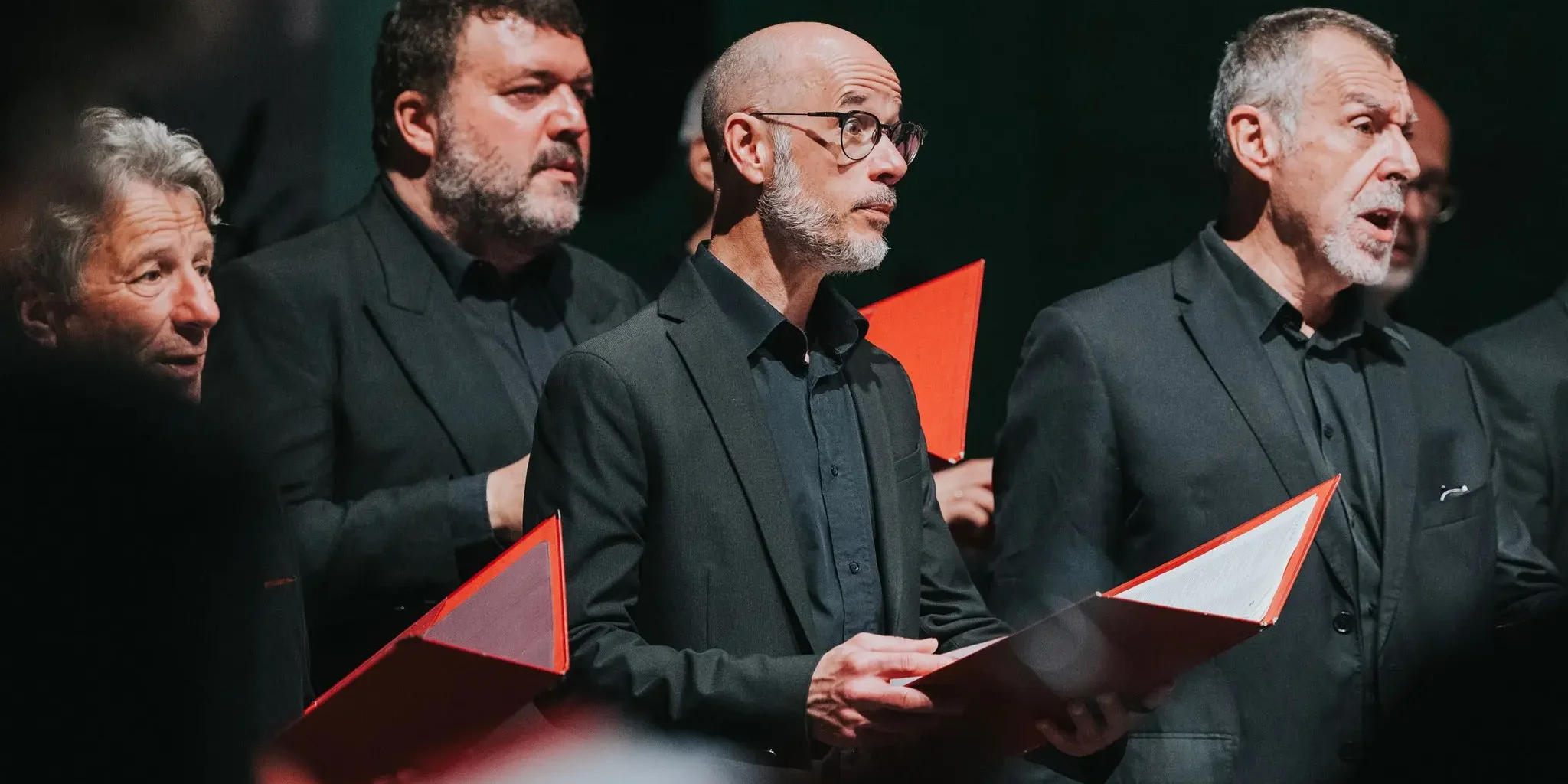
Crédit Photo : Nicolas Duffaure
Vous pouvez suivre le Groupe Vocal Arpège de Bordeaux sur Facebook, Instagram et YouTube ou vous abonner à la newsletter depuis notre site internet: Abonnement Newsletter
The Tenor: The Choir’s Clear, Brilliant Voice
The tenor is the highest male voice commonly found in a choir. In its upper register, its clear, bright sound allows it to stand out easily from the ensemble.
As with the other voices, however, a tenor is not defined solely by the notes he can reach. His comfortable vocal range, timbre, power and flexibility also help determine the true nature of his voice.
A Voice That “Holds” the Music
The word tenor comes from the Latin tenere, meaning “to hold”.
In the polyphonic music of the Middle Ages and the Renaissance, the tenor was the voice that “held” a pre-existing melody, known as the cantus firmus, around which the other voices were organised.
From the thirteenth to the sixteenth century, the tenor was therefore one of the principal foundations of polyphonic writing. At the time, its part lay in a relatively low register, and its role was very different from that of the high, heroic tenor we know today.
From Polyphonic Foundation to Operatic Hero
With the development of opera at the beginning of the seventeenth century — of which Claudio Monteverdi’s L’Orfeo, first performed in 1607, is one of the earliest masterpieces — the role of the tenor gradually began to evolve.
During the seventeenth and eighteenth centuries, however, the leading heroic male roles were most often entrusted to castrati, whose high voices possessed exceptional power and agility.
As the practice of using castrati declined and public tastes evolved, the tenor assumed an increasingly important role. By the end of the eighteenth century, and especially during the nineteenth century, he gradually became the romantic lead and hero par excellence.
The famous “chest high C” then emerged as one of the great symbols of the power and emotion of the tenor voice. In 1837, the French tenor Gilbert Duprez caused a sensation in Paris by singing this note with a full, brilliant sound in Rossini’s William Tell.
Several Families of Tenors
Like sopranos, tenors can be divided into different categories according to their timbre, power, agility and the roles to which their voices are best suited.
The light tenor has a flexible, clear and agile voice that is particularly comfortable with vocal runs and in the upper register. The lyric tenor is distinguished by a warm timbre and a strong ability to sustain expressive melodic lines. The dramatic tenor, whose voice is more powerful and darker, can take on intense roles and be heard above a large orchestra. In the German repertoire, the Heldentenor, or “heroic tenor”, embodies this vocal and dramatic power.
During the twentieth century, Luciano Pavarotti, Plácido Domingo and José Carreras, known collectively as the “Three Tenors”, played a major role in popularising the tenor voice and the operatic repertoire among millions of people around the world.
Why Are Tenors So Sought After in Choirs?
Many choirs struggle to find enough tenors — and Arpège is no exception!
This does not mean that men without vocal training are naturally baritones or basses. Some future tenors instinctively sing in a lower register, which they find more comfortable, before learning how to develop their upper notes.
The tenor part can indeed be demanding. It regularly calls upon the upper part of the male vocal range and requires good breath control, as well as a technique that allows singers to approach high notes without straining.
Some choirs also call upon women with low voices to sing or reinforce the tenor part. In French, they are sometimes informally referred to as ténorettes. Their timbre naturally differs from that of a male voice, but they can provide valuable support and contribute fully to the balance of the ensemble.
Bright and expressive, the tenor occupies a distinctive position between the female voices and the lower male voices. In a choir, its brilliance helps connect the different sections and enrich the harmony of the ensemble.
Photo credit : Nicolas Duffaure
Follow Groupe Vocal Arpège de Bordeaux on Facebook, Instagram and YouTube, or subscribe to our newsletter at Inscription Newsletter