Un voyage musical au cœur de Noël : le programme du concert d’Arpège
De Glow à Douce nuit, en passant par Petit Papa Noël, découvrez les quatorze œuvres du concert de Noël du Groupe Vocal Arpège. Histoires, compositeurs et anecdotes éclairent ce programme varié, à écouter le 17 décembre 2026 au Château de Rouillac, à Canéjan.
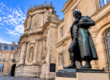
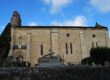
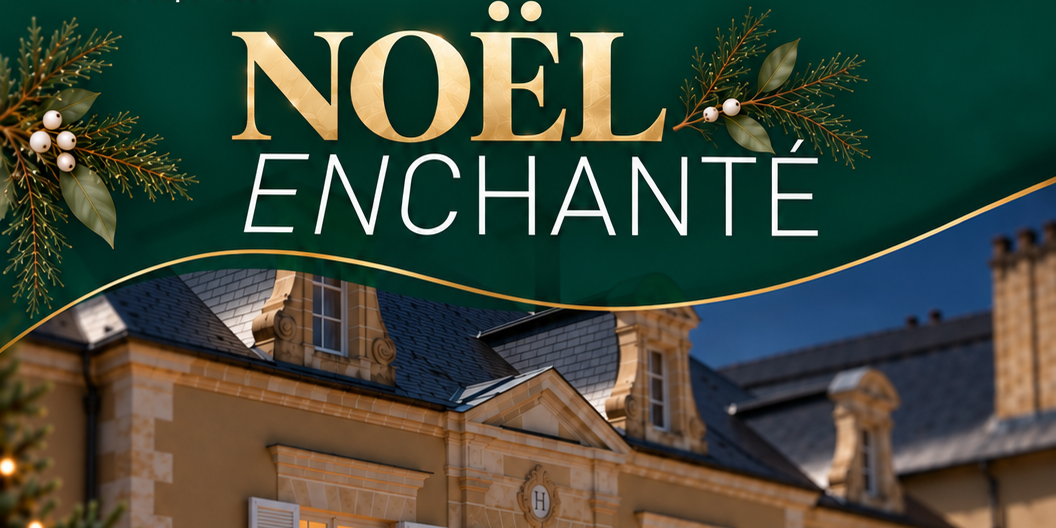
Le concert de Noël de cette année aura lieu le jeudi 17 décembre au Château de Rouillac, à Canéjan, au sud de Bordeaux. Vous pouvez en apprendre davantage sur ce lieu dans l’article de notre blog consacré au château.
Quatorze chants seront interprétés par le Groupe Vocal Arpège de Bordeaux. Cet article vous présente brièvement chacune des œuvres qui composent ce programme particulièrement varié.
1. Glow – Eric Whitacre
Glow, du compositeur, chef de chœur et conférencier américain Eric Whitacre, né en 1970, a été écrit en 2013 pour le World of Color Honor Choir, dans le cadre du spectacle World of Color – Winter Dreams, présenté pour la première fois au parc Disney California Adventure, en Californie.
Pour constituer ce chœur, 1 473 chanteurs représentant les cinquante États américains envoyèrent leurs enregistrements en ligne. Plus de 700 d’entre eux furent sélectionnés pour participer au spectacle, dans l’esprit des projets de chœurs virtuels développés par Eric Whitacre.
Il s’agit d’une pièce chorale paisible, qui évoque un matin d’hiver calme et lumineux s’éveillant sous la neige. Les paroles d’Edward Esch décrivent la lumière de l’aube, la neige fraîche et le chant d’un oiseau. Elles ne comportent aucune référence religieuse ou spécifiquement liée aux fêtes de Noël, ce qui permet à l’œuvre d’être interprétée tout au long de l’hiver.
(SATB et piano)
2. Angels’ Carol – John Rutter
Angels’ Carol est un chant de Noël joyeux et festif composé par Sir John Rutter, né en 1945, compositeur, chef de chœur, éditeur, arrangeur et producteur de disques britannique, principalement associé à la musique chorale.
Cette œuvre évoque la naissance de Jésus-Christ dans une humble étable. Le texte fait entendre les voix des anges, décrit l’étoile brillant comme un signe divin et raconte la nouvelle annoncée aux bergers.
L’arrivée de Jésus y est présentée comme paisible, telle une chute de neige hivernale, et joyeuse comme le soleil du matin, apportant une lumière et un espoir nouveaux à un monde plongé dans l’obscurité. Chaque strophe reprend le refrain latin Gloria in excelsis Deo — « Gloire à Dieu au plus haut des cieux » — pour célébrer la naissance du Christ.
(SATB et piano)
3. In the Bleak Midwinter – Harold Darke
In the Bleak Midwinter est une œuvre chorale composée en 1909 par le compositeur et organiste anglais Harold Darke (1888-1976), puis publiée en 1911.
Darke offrit cette composition comme cadeau de Noël à son amie, l’artiste Margaret Agnes Calkin. Il mit en musique un poème de Christina Georgina Rossetti, intitulé à l’origine A Christmas Carol et publié pour la première fois en 1872.
Le texte oppose la rudesse glaciale d’un hiver privé de vie au miracle profond et humble de la naissance de Jésus. Il souligne un contraste saisissant : le Créateur de l’univers accepte pour demeure une modeste étable, une mangeoire remplie de foin et les tendres soins de sa mère.
(SATB, piano et soliste)
4. Pueri concinite – Johann Ritter von Herbeck
Le texte latin Pueri concinite — « Enfants, chantez ensemble » — avait déjà été mis en musique au XVIe siècle par le compositeur slovène Jacob Handl, également connu sous le nom de Jacobus Gallus (1550-1591).
Le compositeur et chef d’orchestre autrichien Johann Ritter von Herbeck (1831-1877) en réalisa une nouvelle mise en musique au XIXe siècle. Sa version fut interprétée pour la première fois le jour de Noël 1868 dans la chapelle impériale de Vienne.
Il s’agit d’une œuvre classique et solennelle de musique chorale sacrée. Ce chant de Noël en latin célèbre la Nativité, reprend le message de l’ange Gabriel et invite les enfants à louer le Roi nouveau-né. Nous sommes donc bien loin d’une simple comptine enfantine ou d’un air folklorique.
(SATB, piano et soliste)
5. Persischer Nachtgesang – Beethoven/Silcher
Persischer Nachtgesang — « Chant de nuit persan » — est un arrangement choral réalisé en 1846 par le compositeur et pédagogue allemand Friedrich Silcher. Il reprend le célèbre Allegretto, deuxième mouvement de la Symphonie nº 7 en la majeur, op. 92, de Ludwig van Beethoven.
Le texte est du poète allemand Heinrich Wilhelm Stieglitz. Il est tiré de son recueil Bilder des Orients, profondément inspiré par l’orientalisme, ce courant artistique européen fasciné par une vision romancée des cultures, de la poésie et des paysages du Moyen-Orient et de la Perse antique.
(TTBB, piano et soliste)
6. Noël, ou Montez à Dieu – Charles Gounod
Noël, également connu sous le titre Montez à Dieu, est une œuvre chorale sacrée du compositeur romantique français Charles Gounod (1818-1893), sur un texte de Jules Barbier inspiré d’un poème de Ludwig Uhland.
Publié en 1869, ce chant invite les cœurs emplis d’un amour sacré à célébrer Noël, car le jour tant attendu de la naissance du Christ est arrivé et comble les cieux de joie. Il présente la Nativité comme un moment d’éveil spirituel, de paix et de lumière divine rayonnant sur l’humanité.
(Soprano et alto solistes, chœur SSA et piano)
7. Panis angelicus – César Franck
Panis angelicus est une œuvre sacrée de César Franck (1822-1890), compositeur, pianiste, organiste et pédagogue franco-belge.
La Messe à trois voix en la majeur, op. 12, fut composée en 1860. Le Panis angelicus fut écrit plus tard et intégré à une version révisée de la messe en 1872.
L’expression latine Panis angelicus, qui signifie « Pain des anges », est tirée de l’hymne Sacris solemniis, écrit par saint Thomas d’Aquin au XIIIe siècle pour la fête du Corpus Christi, appelée en français la Fête-Dieu.
Le « Pain des anges » évoque la nourriture spirituelle du ciel qui, bien que symboliquement associée aux anges, devient accessible aux êtres humains par le pain consacré lors de la communion.
(SATB, piano et soliste)
8. Minuit, chrétiens – Adolphe Adam
Arrangement : Jacques Charpentier
Il s’agit de l’un des plus célèbres chants de Noël français. Connu dans le monde anglophone sous le titre O Holy Night, il évoque l’espoir, la liberté humaine et la naissance de Jésus en tant que Sauveur.
En 1847, Placide Cappeau, négociant en vins et poète originaire de Roquemaure, dans le Gard, écrivit le texte de Minuit, chrétiens pour célébrer la restauration de l’orgue de la collégiale de sa ville. Adolphe Adam le mit en musique la même année et le chant fut créé à Roquemaure à Noël 1847.
En 1855, le pasteur unitarien américain John Sullivan Dwight en proposa une adaptation anglaise sous le titre O Holy Night.
Le poème appelle les chrétiens à faire de l’heure de minuit le moment d’une véritable transformation intérieure. Il aborde des thèmes puissants tels que la liberté, la fin de l’esclavage et la fraternité : « L’amour unit ceux qu’enchaînait le fer ».
(SATB, piano et soliste)
9. Sei willkommen, Weihnachtszeit – Peter Schindler
Sei willkommen, Weihnachtszeit — « Sois la bienvenue, période de Noël » — a été écrit par le compositeur, pianiste et organiste allemand Peter Schindler, né en 1960.
Cette chanson évoque les sapins, la confection des pains d’épices, le Père Noël, les flocons de neige, la pâte d’amande et, bien sûr, l’Enfant dans la crèche. En somme, elle raconte la période de Noël telle qu’elle peut être vécue à travers les yeux d’un enfant.
(SATB et piano)
10. Petit Papa Noël
Arrangement : Jean-Philippe Doubrère et Jacques Charpentier
Cette célèbre chanson française a été composée par Henri Martinet sur des paroles de Raymond Vincy, puis rendue célèbre par le chanteur et acteur Tino Rossi.
Son histoire commence en 1944. Dans sa première version, écrite pendant la guerre pour une revue théâtrale, la chanson prenait la forme de la prière d’un enfant demandant au Père Noël de lui ramener son père, prisonnier en Allemagne.
Deux ans plus tard, lors de la préparation du film Destins de Richard Pottier, une chanson initialement prévue avec un groupe de gospel dut être remplacée. Henri Martinet proposa alors sa mélodie à Tino Rossi. Séduit, celui-ci souhaita l’utiliser dans le film, tandis que Raymond Vincy en réécrivit les paroles afin d’en supprimer toute référence à la guerre. La version que nous connaissons aujourd’hui était née.
La chanson est interprétée du point de vue d’un jeune enfant qui attend le Père Noël. Il évoque la nuit enneigée, lui demande de ne pas oublier son petit soulier au moment de distribuer les jouets et lui conseille de bien se couvrir, car il fait froid dehors.
Enregistrée par Tino Rossi en novembre 1946, la chanson devint rapidement l’un des plus grands classiques profanes de Noël en France.
(SSAATB et piano)
11. Noël nouvelet
Arrangement : Sofia Söderberg
Noël nouvelet est une mise en musique contemporaine d’un chant de Noël français traditionnel, arrangé pour chœur mixte en 2014 par la cheffe de chœur, organiste et compositrice suédoise Sofia Söderberg, née en 1972.
Le texte anonyme est attesté dès la fin du XVe siècle, ce qui en fait l’un des plus anciens chants français de Noël encore connus. Sa mélodie modale lui confère des sonorités à la fois médiévales, envoûtantes et joyeuses.
L’expression Noël nouvelet évoque à la fois la nouveauté de la nouvelle annoncée et la naissance du Roi nouveau-né.
Le chant raconte l’apparition d’un ange aux bergers dans les champs et les invite à se rendre à Bethléem. Ils y découvrent Marie et Joseph réunis autour de l’enfant Jésus, couché dans une mangeoire plutôt que dans un berceau. Les couplets suivants relatent l’arrivée des Rois mages venus d’Orient, guidés par une étoile brillante, pour se prosterner devant l’Enfant et lui offrir leurs présents : l’or, la myrrhe et l’encens.
La chanson s’achève sur des louanges à Dieu et sur la reconnaissance de Jésus comme le Sauveur venu racheter l’humanité.
(SATB, a cappella)
12. The Virgin Mary Had a Baby Boy
Arrangement : York Sommer
The Virgin Mary Had a Baby Boy est un chant de Noël traditionnel des Antilles dont l’auteur et le compositeur d’origine sont inconnus.
En 1942, le chanteur et acteur trinidadien Edric Connor recueillit ce chant auprès de James Bryce, alors âgé de 92 ans. Il le publia en 1945 dans son Collection of West Indian Spirituals and Folk Tunes, contribuant ainsi à le faire connaître bien au-delà des Caraïbes.
Notre arrangement choral est signé York Sommer, né en 1972, compositeur et arrangeur allemand spécialisé dans la musique chorale.
Il s’agit d’un chant rythmé, joyeux et plein d’entrain, qui raconte l’histoire de la Nativité dans un style inspiré du calypso.
(SATB et piano)
13. Douce nuit (Silent Night)
Arrangement : Norman Luboff
Cet arrangement choral du chef de chœur et arrangeur américain Norman Luboff est riche et somptueux, et reflète son style harmonique caractéristique.
L’un des chants de Noël les plus populaires et les plus enregistrés au monde fut d’abord écrit sous la forme d’un poème en 1816 par le prêtre autrichien Joseph Mohr. Deux ans plus tard, Mohr demanda à son ami Franz Xaver Gruber, organiste, compositeur et instituteur, de mettre le texte en musique.
Stille Nacht, heilige Nacht fut interprété pour la première fois le soir de Noël 1818 dans l’église Saint-Nicolas d’Oberndorf, près de Salzbourg, par Mohr et Gruber, accompagnés à la guitare. Une légende souvent répétée raconte qu’une panne d’orgue les aurait contraints à choisir cet instrument, mais aucun document historique ne permet de le confirmer : l’accompagnement à la guitare faisait simplement partie de la composition originale.
Douce nuit célèbre la naissance de Jésus-Christ ainsi que la paix, l’espoir et la lumière qu’elle apporte au monde. L’évocation de la « grâce rédemptrice » renvoie à la venue du Christ pour sauver l’humanité et lui offrir un nouveau départ spirituel.
(SSATTB et piano)
14. Let It Snow
Arrangement : Mark Hayes
Let It Snow est présenté ici dans un arrangement choral de Mark Hayes, compositeur, pianiste de concert, arrangeur et chef de chœur américain.
La chanson fut écrite en juillet 1945 par Sammy Cahn et Jule Styne, au cours d’une période de forte chaleur à Hollywood. Bien qu’elle soit aujourd’hui indissociable de Noël, ses paroles ne mentionnent ni la fête, ni le Père Noël, ni même les cadeaux.
Elles décrivent simplement un couple restant bien au chaud au coin du feu, heureux de profiter de la compagnie de l’autre tandis qu’une tempête de neige fait rage au-dehors.
Enregistrée pour la première fois en 1945 par Vaughn Monroe, puis interprétée par de nombreux artistes, la chanson fut notamment popularisée par la version de Dean Martin en 1959 et devint progressivement un grand classique des fêtes de fin d’année.
(SATB et piano)
Quelques explications sur les formations vocales
- SATB désigne un chœur mixte ou un arrangement divisé en quatre parties : soprano, alto, ténor et basse.
- TTBB désigne un arrangement à quatre voix graves, généralement masculines : ténor 1, ténor 2, basse 1 et basse 2.
- SSAATB correspond à un chœur mixte à six voix : soprano 1, soprano 2, alto 1, alto 2, ténor et basse.
- SSATTB désigne une partition à six voix : soprano 1, soprano 2, alto, ténor 1, ténor 2 et basse.
- SSA désigne un arrangement à trois voix aiguës : soprano 1, soprano 2 et alto.
- A cappella signifie que le chœur chante sans accompagnement instrumental.
Vous pouvez suivre le Groupe Vocal Arpège de Bordeaux sur Facebook, Instagram et YouTube ou vous abonner à la newsletter depuis notre site internet: Abonnement Newsletter
A Musical Journey into the Heart of Christmas
This year’s Christmas concert will take place on Thursday 17 December at Château de Rouillac in Canéjan, south of Bordeaux. You can find out more about this venue in our blog article dedicated to the château.
The Groupe Vocal Arpège de Bordeaux will perform fourteen songs. This article offers a brief introduction to each of the works in this particularly varied programme.
1. Glow – Eric Whitacre
Glow, by American composer, conductor and speaker Eric Whitacre, born in 1970, was written in 2013 for the World of Color Honor Choir, as part of World of Color – Winter Dreams, a show first presented at Disney California Adventure Park in California.
To form this choir, 1,473 singers representing all fifty US states submitted their recordings online. More than 700 were selected to take part in the show, following the approach of Eric Whitacre’s virtual choir projects.
This peaceful choral piece evokes a quiet, luminous winter morning awakening beneath the snow. Edward Esch’s lyrics describe the light of dawn, fresh snow and birdsong. They contain no religious or specifically Christmas references, allowing the work to be performed throughout the winter.
(SATB and piano)
2. Angels’ Carol – John Rutter
Angels’ Carol is a joyful, festive Christmas carol composed by Sir John Rutter, born in 1945, a British composer, conductor, editor, arranger and record producer best known for his choral music.
The work evokes the birth of Jesus Christ in a humble stable. Its lyrics bring us the voices of angels, describe the star shining as a divine sign and recount the news announced to the shepherds.
Jesus’s arrival is presented as peaceful as falling winter snow and joyful as the morning sun, bringing new light and hope to a world plunged into darkness. Each verse returns to the Latin refrain Gloria in excelsis Deo — “Glory to God in the highest” — to celebrate Christ’s birth.
(SATB and piano)
3. In the Bleak Midwinter – Harold Darke
In the Bleak Midwinter is a choral work composed in 1909 by English composer and organist Harold Darke (1888–1976), and published in 1911.
Darke offered the composition as a Christmas gift to his friend, the artist Margaret Agnes Calkin. He set to music a poem by Christina Georgina Rossetti, originally entitled A Christmas Carol and first published in 1872.
The text contrasts the icy harshness of a lifeless winter with the profound yet humble miracle of Jesus’s birth. It highlights a striking contrast: the Creator of the universe accepts a modest stable as his dwelling, a manger filled with hay and his mother’s tender care.
(SATB, piano and soloist)
4. Pueri concinite – Johann Ritter von Herbeck
The Latin text Pueri concinite — “Children, sing together” — had already been set to music in the 16th century by Slovenian composer Jacob Handl, also known as Jacobus Gallus (1550–1591).
Austrian composer and conductor Johann Ritter von Herbeck (1831–1877) created a new setting in the 19th century. His version was first performed on Christmas Day 1868 in Vienna’s Imperial Chapel.
This is a solemn work in the classical sacred choral tradition. Sung in Latin, this Christmas piece celebrates the Nativity, echoes the message of the angel Gabriel and invites children to praise the newborn King. It is therefore far removed from a simple children’s rhyme or folk tune.
(SATB, piano and soloist)
5. Persischer Nachtgesang – Beethoven/Silcher
Persischer Nachtgesang — “Persian Night Song” — is a choral arrangement made in 1846 by German composer and music educator Friedrich Silcher. It draws on the famous Allegretto, the second movement of Ludwig van Beethoven’s Symphony No. 7 in A major, Op. 92.
The text is by German poet Heinrich Wilhelm Stieglitz. It comes from his collection Bilder des Orients, deeply influenced by Orientalism, the European artistic movement fascinated by a romanticised vision of the cultures, poetry and landscapes of the Middle East and ancient Persia.
(TTBB, piano and soloist)
6. Noël, or Montez à Dieu – Charles Gounod
Noël, also known as Montez à Dieu, is a sacred choral work by French Romantic composer Charles Gounod (1818–1893), setting words by Jules Barbier inspired by a poem by Ludwig Uhland.
Published in 1869, the song invites hearts filled with sacred love to celebrate Christmas, for the long-awaited day of Christ’s birth has arrived, filling the heavens with joy. It presents the Nativity as a moment of spiritual awakening, peace and divine light shining upon humanity.
(Soprano and alto soloists, SSA choir and piano)
7. Panis angelicus – César Franck
Panis angelicus is a sacred work by César Franck (1822–1890), the Franco-Belgian composer, pianist, organist and teacher.
His Mass for Three Voices in A major, Op. 12, was composed in 1860. Panis angelicus was written later and incorporated into a revised version of the Mass in 1872.
The Latin expression Panis angelicus, meaning “Bread of Angels”, comes from the hymn Sacris solemniis, written by Saint Thomas Aquinas in the 13th century for the feast of Corpus Christi.
The “Bread of Angels” evokes the spiritual nourishment of heaven which, although symbolically associated with angels, becomes accessible to human beings through the consecrated bread received during Communion.
(SATB, piano and soloist)
8. Minuit, chrétiens – Adolphe Adam
Arrangement: Jacques Charpentier
This is one of the most famous French Christmas carols. Known in the English-speaking world as O Holy Night, it evokes hope, human freedom and the birth of Jesus as the Saviour.
In 1847, Placide Cappeau, a wine merchant and poet from Roquemaure in southern France, wrote the words to Minuit, chrétiens to celebrate the restoration of the organ in his town’s collegiate church. Adolphe Adam set them to music that same year, and the carol was first performed in Roquemaure at Christmas 1847.
In 1855, American Unitarian minister John Sullivan Dwight produced an English adaptation entitled O Holy Night.
The poem calls on Christians to make the midnight hour a moment of genuine inner transformation. It addresses powerful themes such as freedom, the end of slavery and human fellowship: “Love unites those once bound by chains.”
(SATB, piano and soloist)
9. Sei willkommen, Weihnachtszeit – Peter Schindler
Sei willkommen, Weihnachtszeit — “Welcome, Christmastime” — was written by German composer, pianist and organist Peter Schindler, born in 1960.
The song evokes Christmas trees, gingerbread baking, Father Christmas, snowflakes, marzipan and, of course, the Child in the manger. In other words, it describes the Christmas season as seen through a child’s eyes.
(SATB and piano)
10. Petit Papa Noël
Arrangement: Jean-Philippe Doubrère and Jacques Charpentier
This famous French song was composed by Henri Martinet, with lyrics by Raymond Vincy, and made popular by singer and actor Tino Rossi.
Its story begins in 1944. In its first version, written during the war for a theatrical revue, the song took the form of a child’s prayer asking Father Christmas to bring home his father, who was a prisoner in Germany.
Two years later, during preparations for Richard Pottier’s film Destins, a song originally planned with a gospel group had to be replaced. Henri Martinet then offered his melody to Tino Rossi. Won over, Rossi wanted to use it in the film, while Raymond Vincy rewrote the lyrics to remove all references to the war. The version we know today was born.
The song is told from the perspective of a young child waiting for Father Christmas. He describes the snowy night, asks Father Christmas not to forget his little shoe when delivering the toys, and advises him to wrap up warmly because it is cold outside.
Recorded by Tino Rossi in November 1946, the song quickly became one of France’s best-loved secular Christmas classics.
(SSAATB and piano)
11. Noël nouvelet
Arrangement: Sofia Söderberg
Noël nouvelet is a contemporary arrangement of a traditional French Christmas carol, made for mixed choir in 2014 by Swedish conductor, organist and composer Sofia Söderberg, born in 1972.
The anonymous text can be traced back to the late 15th century, making it one of the oldest French Christmas carols still known today. Its modal melody gives it a sound that is at once medieval, captivating and joyful.
The expression Noël nouvelet evokes both the fresh tidings being announced and the birth of the newborn King.
The carol tells of an angel appearing to shepherds in the fields and inviting them to travel to Bethlehem. There, they discover Mary and Joseph gathered around the infant Jesus, lying in a manger rather than a cradle. Later verses describe the arrival of the Magi from the East, guided by a shining star, to kneel before the Child and offer their gifts of gold, myrrh and frankincense.
The song ends with praise to God and recognition of Jesus as the Saviour who has come to redeem humanity.
(SATB, a cappella)
12. The Virgin Mary Had a Baby Boy
Arrangement: York Sommer
The Virgin Mary Had a Baby Boy is a traditional Caribbean Christmas carol whose original author and composer are unknown.
In 1942, Trinidadian singer and actor Edric Connor collected the song from James Bryce, then aged 92. He published it in 1945 in his Collection of West Indian Spirituals and Folk Tunes, helping to introduce it to audiences far beyond the Caribbean.
Our choral arrangement is by York Sommer, born in 1972, a German composer and arranger specialising in choral music.
This lively, joyful and rhythmic carol tells the story of the Nativity in a style inspired by calypso.
(SATB and piano)
13. Douce nuit (Silent Night)
Arrangement: Norman Luboff
This choral arrangement by American conductor and arranger Norman Luboff is rich and sumptuous, reflecting his distinctive harmonic style.
One of the world’s most popular and frequently recorded Christmas carols began as a poem written in 1816 by Austrian priest Joseph Mohr. Two years later, Mohr asked his friend Franz Xaver Gruber, an organist, composer and schoolteacher, to set the words to music.
Stille Nacht, heilige Nacht was first performed on Christmas Eve 1818 in Saint Nicholas Church in Oberndorf, near Salzburg, by Mohr and Gruber, accompanied by a guitar. An often-repeated legend suggests that a broken organ forced them to choose this instrument, but no historical document confirms this: the guitar accompaniment was simply part of the original composition.
Silent Night celebrates the birth of Jesus Christ and the peace, hope and light it brings to the world. The reference to “redeeming grace” evokes Christ’s coming to save humanity and offer a new spiritual beginning.
(SSATTB and piano)
14. Let It Snow
Arrangement: Mark Hayes
Let It Snow is presented here in a choral arrangement by Mark Hayes, an American composer, concert pianist, arranger and conductor.
The song was written in July 1945 by Sammy Cahn and Jule Styne during a spell of very hot weather in Hollywood. Although it is now closely associated with Christmas, its lyrics mention neither the holiday, nor Father Christmas, nor even presents.
They simply describe a couple staying warm by the fire, happy to enjoy each other’s company while a snowstorm rages outside.
First recorded in 1945 by Vaughn Monroe and subsequently performed by many artists, the song was notably popularised by Dean Martin’s 1959 version and gradually became a festive classic.
(SATB and piano)
A Guide to the Vocal Line-ups
- SATB denotes a mixed choir or an arrangement in four parts: soprano, alto, tenor and bass.
- TTBB denotes an arrangement for four lower voices, usually male: tenor 1, tenor 2, bass 1 and bass 2.
- SSAATB denotes a mixed choir in six parts: soprano 1, soprano 2, alto 1, alto 2, tenor and bass.
- SSATTB denotes a six-part score: soprano 1, soprano 2, alto, tenor 1, tenor 2 and bass.
- SSA denotes an arrangement for three upper voices: soprano 1, soprano 2 and alto.
- A cappella means that the choir sings without instrumental accompaniment.
Follow Groupe Vocal Arpège de Bordeaux on Facebook, Instagram and YouTube, or subscribe to our newsletter at Inscription Newsletter